The Full Story Historic Events
Fort Valley, the county seat, was settled in 1856, and named for Arthur Fort, a famous revolutionary war hero. In 1875, Samuel Henry Rumph propagated a new peach named the Elberta, for his first wife, which brought fame and wealth to the area.
In 1890, F.W. Gano, came south from Michigan and purchased considerable acreage south of town where he erected a small wooden building for Fort Valley High and Industrial School, which grew into Fort Valley State University.
Toward the final stages of efforts to bring about the creation of a new county, the idea of the Peach Blossom Festival was conceived. Between 1922-26, Fort Valley greeted the first peach blossoms in annual festivals of dance, song, elaborate pageants and delicious barbecue. Soon thousands from all over the world would make their way to Fort Valley each March.
In 1927, Mr. A.L. Luce produced the first school bus, now known as "Blue Bird Number One". Blue Bird has grown to be the world's largest producer of school buses and one of the most luxurious recreational vehicles, the Wanderlodge.
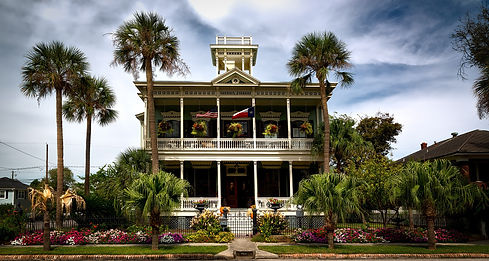
A short walk down the block or a leisurely drive through Fort Valley's Histroic District can treat the observer to a feast for the eyes as most of the homes were constructed between 1840 and 1920. A trip through the District is also a lesson in our history and heritage, as the architecture reflects American's interests and inspirations of the time.
The American Camellia Society, Massee Lane Gardens, consists of 160 acres with eight acres in camellias. It is located 5 miles south of Fort Valley on Hwy 49. The buildings include the 18th century style Headquarters, the Stevens-Taylor Gallery, the Annebelle Lundy Fetterman Educational Museum, a Japanese garden, a rose garden, and landscaped greenhouses. It is a favorite place for artist, naturalist, weddings, conferences and for those seeking a quiet meditative spot.
Founded by Dr. Charles H. Richardson, Bryron was named for Lord Byron, the English poet. Incorporated by an Act of Legislature in 1874, Byron grew up around the railroad as a flag-stop in the early 1850's and was known as "Number One and One-Half Station". Farming was the principle occupation, during the early days although the town has had and abundance of professionals, doctors, lawyers, druggist, teachers, etc. mercantile shops and general merchandise stores throughout the years.
Located where Main Street and Heritage Boulevard meet, the beautifully restored Depot has a museum depicting the past, people of Byron, and restored rail cars. Many of the houses within the Historic District were built during the railroad's heyday between 1850 and 1916.
The village of Powerville located between Byron and Fort Valley on Mule Creek, was first named Station #1 when the Southwestern Railroad was being built from Macon to Albany in 1852-53. Mr. Alfred Cliett suggested that it be named for Col Virgil Powers, a civil engineer for the railroad. Powersville's industries have included: a grist mill, saw mills, cotton gin, blacksmithing, syrup making, and a licensed Government Distillery at Brown's Mills nearby.
Mission
To preserve the past for the pleasure of the present and the education of the future and to promote the study of the history of Peach County.
Our records should be of the greatest interest to our community, as well as constituting a background of historical material which will be a source of pride to future generations.
Vision
We are very proud of what we do – telling the stories and saving history in Peach County
To bring together the records of the past and to house them in buildings where they will be preserved for the use of men and women living in the future, a Nation must believe in three things.
It must believe in the past. It must believe in the future. It must, above all, believe in the capacity of its own people so to learn from the past that they can gain in judgements in creating their own future.
Franklin Delano Roosevelt,
Dedication of The National Archives